Saturday, August 29, 2015

How TV propaganda is affecting Russian society


via MT on Facebook

bbc.co.uk
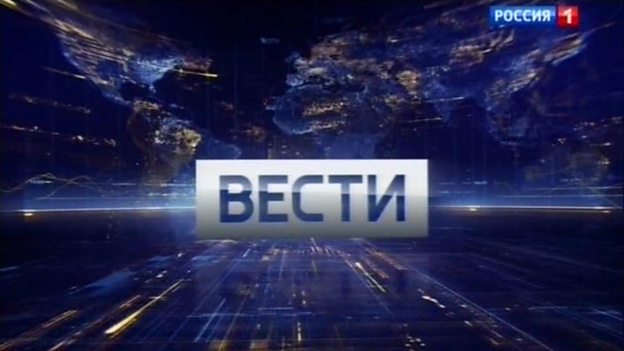
Russian state TV news has been dominated by propaganda about Ukraine

By Stephen Ennis

Russian TV's relentless propaganda onslaught during the Ukraine crisis has not only turned large sections of the population against the West. It also appears to be having an effect on social relations inside the country.
Numerous stories have emerged in the media over the past year of how state TV's highly emotive coverage of Ukraine has turned friends and family members against each other, leading in some cases to serious breakdowns in communication.
It also seems to be creating a society with an appetite for war and aggression.
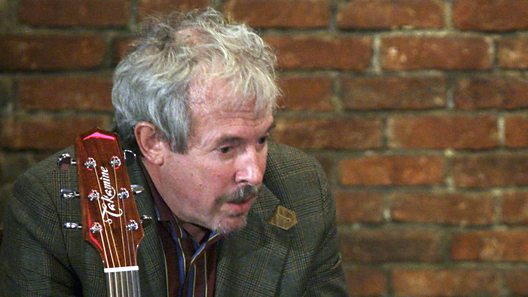
Russian musician Andrei Makarevich
Musician Andrei Makarevich is among many liberals attacked by state TV over their stance on Ukraine
Last summer, Gazprom-Media's NTV ran a series of programmes attacking Russian celebrities and politicians seen as sympathetic to the new government in Kiev.
One was called "13 friends of the junta" and began with footage of veteran rock star Andrei Makarevich performing a charity concert for displaced children in the town of Svyatohirsk in government-controlled east Ukraine.
But according to NTV, the concert was a cynical ploy to revive Makarevich's flagging career and was somehow timed to coincide with a Ukrainian army offensive.
Cue a sequence in which Makarevich's guitar chords were synched with artillery volleys and culminating in a massive fireball of destruction. Two of his Russian music business colleagues were then shown denouncing him as a "traitor".
It was a classic state TV smear, but also a clever piece of psychological manipulation.

'Propaganda carpet-bombing'

In an article published on Latvia-based website Spektr just a few days later, Moscow family psychologist Lyudmila Petranovskaya described how Russian state TV tries to get inside people's heads.
"One can say that over these past months Russian viewers have been subject to mass emotional rape, propaganda carpet-bombing," Ms Petranovskaya wrote.
"The point here is not to impart a certain point of view. Reports and messages are constructed so that the viewer understands that he himself should make a moral choice."
The effect of this intense bombardment can be seen in the sharp rise of anti-Western sentiment captured in numerous opinion polls. But it also appears to be having an impact on people's personal lives.
Ms Petranovskaya said her post-bag had been filled with letters from people asking in different ways the question: "What's happened to them?"
Some wrote of pleasant elderly neighbours who out of nowhere and "with hatred and rising blood pressure" started ranting about the "bloody Kiev junta".
Others, she said, were astounded to find friends, who they had thought of as intelligent and ironic, launching into diatribes about how President Putin had "raised Russia from its knees".

'Zombified'

Ms Petranovskaya was writing a year ago. But similar stories continue to emerge today.
In an interview with the liberal website Colta, TV producer Stanislav Feofanov said his mother had been "zombified" by propaganda to such an extent that the only thing he could talk to her about were "domestic details".
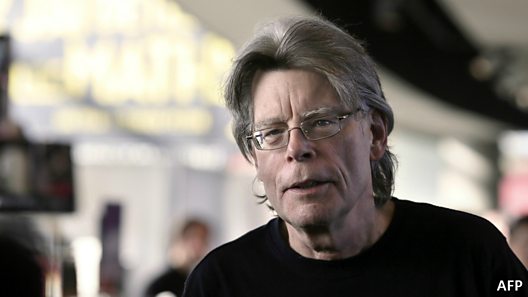
Archive picture of science fiction author Stephen King
The effects of Russian TV propaganda have been compared to the nightmare scenarios of Stephen King
Case histories recorded in an article on the social activist website Takiye Dela echoed Feofanov's experience.
"Anna" (not her real name), who edits a magazine in London, spoke about how her mother started calling her an "enemy of the people" because she had published an interview with one of President Putin's opponents.
For both her parents, the "correct opinion has become what is said on TV", she said.
The situation was all more the perplexing for "Anna" because her parents were "educated, intelligent people" who had supported the reforms of the 1990s and at the last presidential election had voted not for Vladimir Putin, but his liberal opponent, businessman Mikhail Prokhorov.
Moscow student "Lena" had similar problems with her 78-year-old grandfather, who had also appeared until recently to be liberal and open-minded.
When she declined his invitation to watch a film on state TV about Putin, he waved her away muttering: "How did I raise a fifth column in my own home."
But it is not just a generational divide. "Ivan", an IT specialist from Samara, described how he had grown apart from his wife of 11 years because of her support for Putin's actions in Ukraine.
"We are both afraid to make any comment at all about the news, even though we used to be able to discuss politics calmly," he said.

'Unthinkable'

This kind of breakdown in communication was also noted by sociologist Karina Lipiya of the Levada polling organization.
"People generally do not want to hear another point of view," she told Radio France Internationale's Russian-language website.
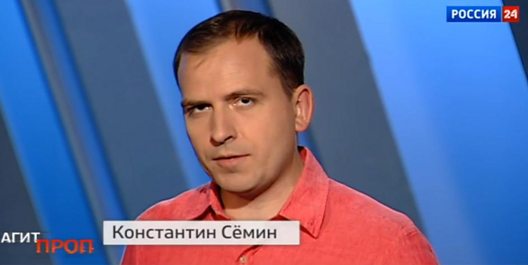
Russian state TV presenter Konstantin Semin
State TV presenter Konstantin Semin predicts a propaganda escalation
Her Levada colleague Alexei Levinson noted how significant numbers of Russians were now entertaining thoughts that "until yesterday were unthinkable and unacceptable".
As he wrote in business daily Vedomosti in April, 47% men said Mr Putin's statement about being ready to use nuclear weapons "did not make them fearful". A large proportion of young people (40%) also thought Russia could defeat the United States in a nuclear war, he said.
Mr Levinson linked these bellicose opinions to the influence of television.
Recent research suggests that Kremlin TV propaganda may have declined in popularity from a peak in the summer and autumn of 2014.
But Ukraine still dominates the TV news, and talkshows where guests rant about US plans for world domination continue to command large audiences.
For veteran TV critic Yury Bogomolov, this suggests that many Russian people have somehow become "addicted to propaganda" and now have an "appetite for aggression".
"There is a cycle of hatred in our society," he wrote in a blog on the website of independent radio station, Ekho Moskvy.

More to come?

Vedomosti's Maxim Trudolyubov reached a similar conclusion, suggesting that TV propaganda now induces a form of "intoxication" in the viewer.
He also stressed that pro-Kremlin TV's apparent power to exert such phenomenal influence over large numbers of Russians was not because of an absence of available alternatives, as was largely the case in the USSR.
TV would not be so "pre-eminently successful" at this if the "citizens did not want it to be", he wrote.
Both Ms Petranovskaya and Trudolyubov have likened the effects of TV propaganda to scenarios in novels by the US author, Stephen King.
Ms Petranovskaya alluded to "Cell", in which a mobile-phone signal turns previously normal people into savage zombies.
For Trudolyubov, the alternative reality created by Russian TV was reminiscent of the small town cut off from the outside world in "Under the dome".
The scale and intensity of the current propaganda campaign is unprecedented in modern Russia. One would probably have to go back to the Stalin era to find anything comparable.
But there may be more to come - certainly, if state TV presenter Konstantin Semin gets his way. Writing on the Odnako website, Semin said that what passed today for ideology on state TV was a mere hotch-potch of liberalism and patriotism with a sprinkle of Soviet nostalgia.
But if things really get tough, he said, the state will have to overhaul the media and develop a proper "mobilising ideology - the ammunition for propaganda artillery".

Thursday, August 27, 2015

Donald Trump’s surge is all about less-educated Americans - Note for a lecture, "E Pluribus Unum? What Keeps the united States United"


washingtonpost.com


In the last few weeks, Americans (and the media) have watched in awe as a New York real estate magnate prone to bellicose behavior and hyperbole has become the GOP's leading candidate for the White House.
But how did this come to be? A lot of it has to do with education.
Trump's support is strongest with Republicans in the Midwest, conservatives across the country who do not have a college degree and (perhaps not surprisingly) those who report the most negative views of immigration and Mexican immigrants in particular, according to a Washington Post-ABC News poll released last week.
To be clear, the poll found that 60 percent of all Americans support the idea of offering undocumented immigrants currently in the United States some form of legal status, and 57 percent told pollsters they believe that immigrants strengthen the country. But there are plenty of people who see things differently. And those people appear to be concentrated among whites, Republicans and those with lower levels of education. Take note of the peaks below.
Trump has certainly distinguished himself as the candidate willing to express outrage and horror about the nation's immigration challenges. He has also espoused a range of demonstrably false, unproven and outright conspiratorial ideas about immigration.
Those ideas might sound outrageous and even xenophobic to some Americans. But when you look at who told pollsters that they share at least some of Trump's concerns, that same pattern mentioned up above — white, Republicans with more limited education — shows up in a slightly more subtle way. Pay close attention to the blue bars below.
It seems that education really matters here. Even when pollsters took race out of the equation — to the extent that that is possible since the Republican base is overwhelmingly white — and looked at all Republicans, the relationship between education and Trump support was pretty clear.
Witness the following:
So, what's going on here?
Economic worries as well as anxiety about a shifting cultural landscape have long been hard to separate from this. American immigration policy has even been directly shaped by these forces. And people who face the most direct competition with immigrants for jobs or see large numbers of immigrant workers entering or working in their fields have repeatedly fueled or responded to political movements in the United States that center around concern, fear and or loathing of immigrants. 
Today, workers at the top of the education and income scales face some increasingly well-documented competition from well-educated immigrant workers and workers abroad. But it's Americans at the bottom who tend to face job competition most intensely.
Here's why: The majority of immigrant workers in the United States today arrived with limited education and can perform the same tasks as American workers who do not have college degrees or specialized training. And even some immigrants with training in medicine, the sciences, engineering and other fields can not readily practice their profession in the United States without significant time and money to invest in education, training and testing in the United States. So immigrant workers are clustered in manual labor jobs, service industry work and some factory and retail positions. These are, of course, jobs largely held by American-born people of color and whites with limited education.
In regions such as the Midwest and South, where globalization and American trade deals have arguably ravaged industries that once provided family-sustaining wages for some of these same sets of workers, the competition for even these often low-wage jobs is intense. Adding to the situation, when the nation's most recent immigration surge — much of it illegal — began in the 1990s (and ended around 2007, according to Pew Research Center data), many immigrant workers found jobs in the Midwest and South. These are areas of the country that had not seen large influxes of immigration for more than 100 years. Perhaps an ongoing, if smaller, trickle of immigrants to the Northeast has something to do with why attitudes about immigration seem far different there than in other parts of the country. None of that is to say that this read on immigration and immigrant labor is totally accurate, logical or properly channeled. Labor unions, whose members tend to vote for Democrats, now champion immigration reforms that would extend some some sort of legal status to the nation's estimated 11.3 million undocumented immigrants.
Their thinking: This will relieve some of the downward pressure on wages and level the playing field between immigrant and native-born workers. Big business interests and many economists insist that immigrant workers largely fill roles that American workers don't want or are no longer practical and, in this sense, help to fuel opportunity and even some pressure for American workers to gain more skills, education and training.
Those are two ways to view things. The Trump way is another. So there you have it. In a nutshell, the people pushing Trump to the head of the polling pack in the very crowded Republican field, the people who have assured Trump a position on the debate stage next month and the people fueling Trump's candidacy are — overwhelmingly but not limited to — white, Republicans with limited education. They have their reasons.

Tuesday, August 25, 2015

Literary Magazines for Socialists Funded by the CIA, Ranked


via BB on Facebook

Patrick Iber, theawl.com [JB Note: The article does not mention Preuves.]

partisanreview
In May of 1967, a former CIA officer named Tom Braden published a confession in the Saturday Evening Post under the headline, “I’m glad the CIA is ‘immoral.’” Braden confirmed what journalists had begun to uncover over the previous year or so: The CIA had been responsible for secretly financing a large number of “civil society” groups, such as the National Student Association and many socialist European unions, in order to counter the efforts of parallel pro-Soviet organizations. “[I]n much of Europe in the 1950’s,” wrote Braden, “socialists, people who called themselves ‘left’—the very people whom many Americans thought no better than Communists—were about the only people who gave a damn about fighting Communism.”

The centerpiece of the CIA’s effort to organize the efforts of anti-Communist artists and intellectuals was the Congress for Cultural Freedom. Established in 1950 and headquartered in Paris, the CCF brought together prominent thinkers under the rubric of anti-totalitarianism. For the CIA, it was an opportunity to guarantee that anti-Communist ideas were not voiced only by reactionary speakers; most of the CCF’s members were liberals or socialists of the anti-Communist variety. With CIA personnel scattered throughout the leadership, including at the very top, the CCF ran lectures, conferences, concerts, and art galleries. It helped bring the Boston Symphony Orchestra to Europe in 1952, for example, as part of an effort to convince skeptical Europeans of American cultural sophistication and thus capacity for leadership in the bipolar world of the Cold War. By purchasing thousands of advance copies that it gave away for free, the CCF supported the publication of many of the era’s anti-Communist classics, such as Milovan Djilas’ The New Class. But its most impressive achievement was a stable of sophisticated literary and political magazines. The CCF’s flagship journal was the London-based Encounter, but it also published Preuves in France, Tempo Presente in Italy, Forum in Austria, Quadrant in Australia, Jiyu in Japan, and Cuadernos and Mundo Nuevo in Latin America, among many others.

Through the CCF, as well as by more direct means, the CIA became a major player in intellectual life during the Cold War—the closest thing that the U.S. government had to a Ministry of Culture. This left a complex legacy. During the Cold War, it was commonplace to draw the distinction between “totalitarian” and “free” societies by noting that only in the free ones could groups self-organize independently of the state. But many of the groups that made that argument—including the magazines on this left—were often covertly-sponsored instruments of state power, at least in part. Whether or not art and artists would have been more “revolutionary” in the absence of the CIA’s cultural work is a vexed question; what is clear is that that possibility was not a risk they were willing to run. And the magazines remain, giving off an occasional glitter amid the murk left behind by the intersection of power and self-interest. Here are seven of the best, ranked by an opaque and arbitrary combination of quality, impact, and level of CIA involvement.
newleader
7. The New Leader
The New Leader was founded in the nineteen twenties as a voice for American socialism, but by the dawn of the Cold War, it focused incessantly on establishing the totalitarian and imperialist character of the Soviet Union. During The New Leader’s heyday in the late forties and early fifties, its editor was Sol Levitas. The New Leader’s relationship with the CIA wasn’t always easy; the CIA actually thought that Levitas’s anti-Communism was too ferocious, unrelenting, and “conservative.” The New Leader argued consistently that Soviet society was totalitarian in nature and Communism everywhere was controlled by the Kremlin, while the CIA wanted a more moderate and “sophisticated” voice that would appeal to the European left. In spite of its strident anti-Communism, The New Leader remained progressive in the context of U.S. domestic politics; it was one of the first publications to publish Martin Luther King, Jr.’s Letter from a Birmingham Jail.
dermonat
6. Der Monat
Der Monat (“The Month”) was a German magazine founded in 1948 by New Yorker Melvin Lasky; the magazinewas his attempt to put his desired politics of “cultural freedom” into action. The year before, Lasky had caused a stir at the First German Writers’ Congress when he brought up the persecution and suppression of writers in Russia. He argued that those in the West should have sympathy for Russian writers, who had to continually worry about secret police actions and that shifting party doctrine might brand them overnight as “decadent counterrevolutionary tools of reaction.” Originally published under the authority of the U.S. military government in divided Germany, it became an important template for the magazines of the Congress for Cultural Freedom and was later incorporated into that network. Many have suspected Lasky himself of being a CIA agent, he denied it to the death.

Der Monat published the work of Theodor Adorno, Arthur Koestler, Hannah Arendt, Heinrich Böll, and Thomas Mann.
kenyonreview
5. Kenyon Review
Probably the finest literary magazine in American history, the Kenyon Review was founded by John Crowe Ransom in 1939. The intellectuals and CIA officers who ran the Congress for Cultural Freedom loved Ransom, and used him and his literary networks to locate promising students and literary friends that it could recruit to work for it. Even Ransom’s technique of “New Criticism,” seen as a quintessentially conservative Cold War form of analysis because it eschewed examination of the social and political context of literary works, hassometimes been compared to the work of espionage, by which careful reading can unearth hidden plans and meanings.
A partial list of the nearly insuperable roster of theKenyon Review’s authors includes Robert Lowell, T.S. Eliot, Flannery O’Connor, Thomas Pynchon, Nadine Gordimer, Randall Jarrell, and Joyce Carol Oates. It, as well as others, including the Hudson Review, the Sewannee Review, Poetry, Daedalus,Partisan Review, and The Journal of the History of Ideas, had hundreds and even thousands of copies purchased for distribution abroad by the Congress for Cultural Freedom, and sometimes received grants more directly. This was significant help for a small magazine; Kenyon Review had to close for a decade beginning in 1969, just a few years after revelations of CIA involvement forced such support to be discontinued. Robie Macauley, who had been recruited by the CIA some years earlier, succeeded Ransom as editor of the Kenyon Review.
Paris Review4. Paris Review
Of all the publications on this list, the Paris Reviewmay be the one with the weakest connection to the CIA. Like the Kenyon Review, the Paris Review is one of the twentieth century’s finest literary magazines. Edited by George Plimpton, it published the likes of Italo Calvino, Samuel Beckett, Philip Roth, V.S. Naipaul, Jack Kerouac, Donald Barthelme, Jeffrey Eugenides, and Jonathan Franzen. Peter Matthiessen, one of the co-founders of the Paris Review, had been recruited into the CIA and the magazine initially served as part of his cover. But he maintained that the connections ended there, and that the Paris Review was certainly not a part of the Congress for Cultural Freedom. For a 2012 article published in Salon, however, Joel Whitney examined the archives of the Review and found a deeper-than-acknowledged relationship with the CCF and, therefore, the CIA. Some of this was inevitable: They shared a Parisian milieu and had common interests. But the record clearly shows that the Paris Review benefited financially from selling article reprints to CCF magazines. This was far from the CCF’s direct participation in management of Der Monat or Encounter, but the Paris Review did derive some benefit from the CIA, and there is circumstantial evidence that this affected the choices of authors for its interview series. In a way, the Paris Review case shows how difficult it was for “apolitical” highbrow literary periodicals to get through that period of the Cold War without some form of interaction with the CIA.
partisan3. Partisan Review
Partisan Review was, for a few short years, one of the finest magazines produced. In the late thirties and early forties, when it was funded primarily by the painter George Morris, it was controlled by an avant-garde group of “literary Trotskyists” interested in fusing cultural modernism with political anti-Stalinism. Delmore Schwarz’s well-known short story, “In Dreams Begin Responsibilities,” was published there in 1937—and that issue alone contains work by Wallace Stevens, Edmund Wilson, James T. Farrell, Pablo Picasso, James Agee, Mary McCarthy, and Dwight Macdonald. George Orwell was another frequent contributor, and Partisan Review was first to publish many classic essays of criticism, including Clement Greenberg’s “Avant Garde and Kitsch,” and Susan Sontag’s “Notes on ‘Camp.’” The magazine, like so many, peaked early in its publication history. By the time that it received CIA support in the nineteen fifties, it had lost some of its initial energy, and its politics were growing increasingly “neoconservative,” although it continued on as a “little magazine” until 2003. (Boston University has made every issue of Partisan Review fully available online.)
encounter
2. Encounter
London-based Encounter was considered the crown jewel of the Congress for Cultural Freedom’s publishing program. Created in 1953, Encounter was edited by Irving Kristol and later, Melvin Lasky, while the literary pages were for many years curated by the poet Stephen Spender. It regularly published both British and American writers, including Isaiah Berlin, Mary McCarthy, Hugh Trevor-Roper, W.H. Auden, Daniel Bell, Arthur Schlesinger, Jr., Bertrand Russell, Stuart Hampshire, and John Kenneth Galbraith. It is often credited with helping shift the British intellectual scene away from socialism and towards an “Atlantic,” pro-U.S. outlook. Edward Shils worked out his ideas of “The End of Ideology” in its pages; C.P. Snow published his essay on the “two cultures” of the natural sciences and the humanities there; and it published Nancy Mitford’s “The English Aristocracy,” the classic essay about “U and non-U” describing differences in pronunciation between British classes. It also helped introduce English readers to authors like Jorge Luis Borges, and frequently featured the witty and erudite anti-Communism of Leszek Kolakowski. (See his “How to be a Conservative-Liberal Socialist”—the founding document of what he describes as “the Mighty International that will never exist,” for a reasonable distillation of the magazine’s ideology.) Encounter’s strength was such that it survived the CIA scandals of the late sixties and continued publishing on its own into the early nineties. The entire run of Encounter is fully available online.
mundonuevo
1. Mundo Nuevo
The Congress for Cultural Freedom’s programs were not limited to Europe, and in the mid-sixties, it was trying to shift its Latin American operation from one that was ineffectively fighting the relatively unimportant pro-Soviet Communist parties of the region to one that would subtly undermine the appeal of Fidel Castro’s Cuba. It closed one magazine, Cuadernos, in 1965, and launched Mundo Nuevo a year later to try to appeal to more left-wing writers. The initial director ofMundo Nuevo, the Uruguayan Emir Rodríguez Monegal, insisted that he was trying to broker peace in the Cultural Cold War and have an honest dialogue about art and politics in Cuba.
Like other magazines affiliated with the Congress for Cultural Freedom, Mundo Nuevopublished essays critical of U.S. policy in Latin America and Vietnam. Its usefulness, from the U.S. government’s point of view, consisted in its defense of the responsibility of the artist as an independent critic of power, rather than part of a the machinery of revolutionary social transformation. Cuban intellectuals noted the magazine’s ties to the CCF and refused to participate; nonetheless, in its first few issues, Mundo Nuevo was an extraordinary success. Pablo Neruda, the Communist poet who only a few years earlier had been the subject of a CCF campaign to undermine his candidacy for the Nobel Prize, contributed several poems. There are interviews with Carlos Fuentes and Jorge Luis Borges, and fiction that would be foundational to the “boom” in Latin American letters from José Donoso and Guillermo Cabrera Infante. Most surprisingly, it published an early excerpt from the still unpublished One Hundred Years of Solitude, by Gabriel García Márquez. García Márquez, later famous for his close friendship with Fidel Castro, regretted his contribution when connections to the CIA were soon revealed. Nonetheless, José Donoso, in his memoir of the boom in Latin American literature, wrote that Mundo Nuevo was the “voice of Latin American literature of its time,” and at the center of a major phenomenon in world literature.

10 States With the Fastest Job Growth, Note for a lecture, "E Pluribus Unum? What Keeps the United States United."


from: kiplinger.com

If you're looking for a job, you might want to try sending out resumes in these states.


These 10 states are likely to see the fastest employment gains this year, all topping the 2% national average.
WWW.KIPLINGER.COM

Dad And His 8-Year-Old Son Are Creating A Pun-Fueled Food Map Of Every US State: Note for a lecture, "E Pluribus Unum? What Keeps the United States United"


via PR on Facebook

distractify.com

Chris Durso of Foodiggity started a hilarious project with his 8-year-old son last year called Foodnited States of America. The "pun-fueled" photo series is recreating every single U.S. state out of food.

New Jersey


California


Maine


Arkansas


Missouri


Wisconsin


Washington


Rhode Island


Utah


Pennsylvania


North Carolina


Iowa


Wyoming


Georgia


Texas


Ohio


Colorado


Idaho


Delaware


Tennessee


Kentucky


Arizona


North Dakota


South Dakota


Kansas


Massachusetts


Alabama


Nevada


Virginia


Connecticut


Minnesota


New Mexico


Alaska


Indiana


Hawaii


Vermont


Florida


South Carolina


Mississippi


Nebraska


Oregon


Illinois


Montana


Louisiana


New Hampshire


You can follow Durso and his son add more brilliant food map puns to their series under the hashtag #foodnitedstates on Foodiggity's Instagram account .