Friday, December 13, 2013

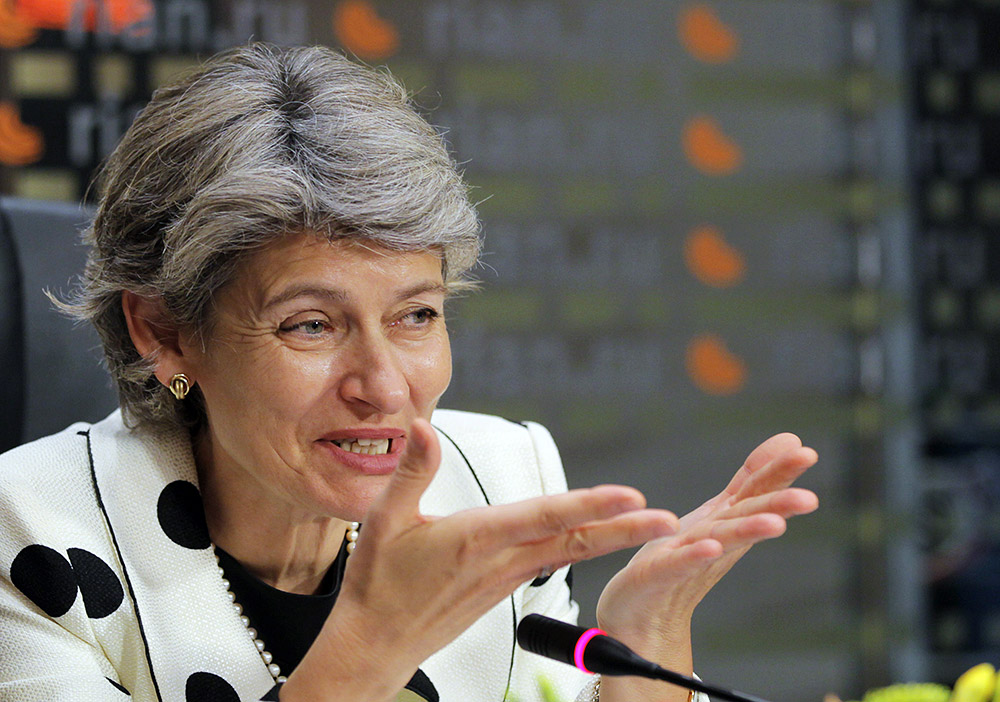
Interview with Irina Bokova, UNESCO Director General


КУЛЬТУРАКУЛЬТУРНАЯ ПОЛИТИКА

«Культура — это не пустая трата денег»

Интервью гендиректора ЮНЕСКО Ирины Боковой


Ирина Бокова, генеральный директор ЮНЕСКО
Фотография: Виталий Белоусов/РИА «Новости»
 | 

Ирина Бокова, избранная генеральным директором ЮНЕСКО на второй срок, рассказала «Газете.Ru», с какими трудностями пришлось столкнуться организации, как удалось с ними справиться, помогла ли ЮНЕСКО Россия и как культура стала креативной индустрией.
В ноябре собрание исполнительного комитета ЮНЕСКО переизбрало на должность генерального директора организации Ирину Бокову, занимавшую этот пост последние четыре года. Бывший министр иностранных дел Болгарии, она стала первой женщиной — руководителем ЮНЕСКО за всю его историю. Ее полномочия пришлись на кризисный момент: в ноябре 2011 года стало известно, что США и ряд других стран в связи с признанием ООН Палестины отказались платить членские взносы в бюджет ЮНЕСКО. Так впервые более чем за полувековую историю организация оказалась на грани банкротства. «Газета.Ru» поговорила с Ириной Боковой о том, как удалось преодолеть финансовый кризис, о помощи со стороны России и о том, чем может стать культура в XXI веке.
— Вас избрали главой ЮНЕСКО на второй срок. Каковы для вас итоги предыдущих четырех лет: чем гордитесь, что удалось и чего не удалось сделать?
— Оценивать себя и свои действия всегда сложно. Самым главным достижением последних четырех лет было, конечно, то, что мы смогли сохранить ЮНЕСКО. Мой первый срок пришелся на очень трудные времена. Два года назад США перестали платить свои регулярные взносы и не платят их уже третий год. Поэтому в конце 2011 года мы столкнулись с очень большим дефицитом — около 30% от уже утвержденного бюджета, или 220 млн долларов. Поэтому основное, что мне удалось сделать, – это сохранить организацию и ее основные направления работы, создать специальный чрезвычайный фонд, куда страны могли перечислять дополнительные взносы для помощи организации. Мы смогли привлечь в этот фонд 75 млн долларов для наших основных программ. Провели внутреннюю реформу организации, не увольняя при этом наших экспертов. И сохранили за счет этого ЮНЕСКО. Да, все это было очень трудно, но мы это сделали.
— Сейчас у ЮНЕСКО есть дефицит бюджета?
— Нет, уже нет. В этом году мы вышли на плановые показатели. Наш бюджет на следующий год сверстан без дефицита. Это было очень сложно сделать, особенно не прибегая к внешним займам, но у нас получилось.
— Помогла ли вам Россия?
— Да. Россия помогала с организацией заседания комитета всемирного наследия в Санкт-Петербурге. Это очень важное для нас мероприятие, оно прошло в 2012 году. Российская сторона полностью взяла на себя все расходы, которые обычно делятся между ЮНЕСКО и принимающей страной (причем не в равном соотношении — большую часть платит ЮНЕСКО, меньшую — принимающая сторона). Мало того — было потрачено гораздо больше, потому что дата проведения комитета совпала с 40-летием Конвенции всемирного наследия, и российская сторона сделала большой праздник по этому поводу.
— Кстати, по поводу Санкт-Петербурга. Центр этого города включен в список всемирного наследия — этот момент, возможно, и не в вашей компетенции, а в компетенции каких-то специальных комиссий, которые следят за сохранностью объектов…
— Да, этим занимаются специальные комиссии.
— Часто возникают вопросы их сохранности — и конкретно этого, и других петербургских объектов, включенных в список ЮНЕСКО. В правилах организации записано, что если страна, где находится объект культурного наследия, плохо следит за сохранностью объекта или подвергает его несогласованным изменениям, то сам объект может быть исключен из перечня ЮНЕСКО. У вас есть уже кандидаты на вылет?
— Есть список памятников, которые находятся под угрозой уничтожения, сейчас он насчитывает двадцать с лишним объектов. Причины, по которым мы включаем туда объекты культурного наследия, самые разные. Иногда это плохой менеджмент, иногда плохие климатические условия, которые разрушают объект, иногда – война, как в случае с Сирией, например. Мы, кстати, включили в этот список пять памятников, находящихся в Сирии на грани разрушения.
В 2009 году комитет исключил из списка всемирного наследия Дрезденскую долину Эльбы из-за того, что через реку построили мост.
Наши эксперты очень внимательно следят за сохранностью объектов, и прецеденты исключения из списка уже есть. Конечно, это вовсе не значит, что комитет против урбанизации или реконструкции, но любое вмешательство должно быть сделано в соответствии с критериями конвенции, чтобы сохранить аутентичность самого памятника и его интеграции в окружающую среду.
— А в список всемирного наследия ЮНЕСКО будут включены новые объекты из России?
— Этот вопрос точно не ко мне, а к послу России в ЮНЕСКО — это его право вносить и представлять объекты на обсуждение Комитета по всемирному наследию. А уже комитет оценивает поданные заявки от каждой страны. Кстати, последний раз комитет заседал в середине ноября, во время генеральной ассамблеи всех стран — участниц конвенции ЮНЕСКО. Что касается планов России по поводу внесения заявок, то мне о них ничего не известно. Первое заседание нового комитета состоится в конце января в Катаре, так что есть время, чтобы каждая страна — участница ЮНЕСКО представила свои предложения и заявки.
— Как сейчас обстоят дела внутри ЮНЕСКО?
— Сейчас мы выходим из очень сложного периода. Я бы не сказала, что сейчас дела идут легче, ведь США все еще не платят. Но после прошедших реформ и преобразований последних двух лет у нас, можно сказать, «мягкая посадка» в условиях сокращенного бюджета. Это самое главное.
Второе, немаловажное достижение — за эти годы, как мне кажется, организация стала более узнаваема. Мы стали более интегрированы в систему ООН. Это может показаться парадоксальным, но даже в сложных финансовых условиях мы сохранили лидерство по основным направлениям деятельности. И продолжаем в полной мере отвечать за принятые обязательства — в том числе и по инициативам генсека ООН Пан Ги Муна, которые, прежде всего, касаются сферы образования. В их числе и создание научно-консультативного совета при генеральном секретаре ООН (куда, кстати, входит и академик Владимир Фортов, председатель Академии наук России). Он будет работать напрямую с генеральным секретарем ООН, а мы как ЮНЕСКО тоже будем курировать его работу. Этот научный совет – наша общая с ООН инициатива. И это помимо нашей работы в области культуры, которую мы не прекращали.
— А в культуре ЮНЕСКО готовит какие-то преобразования?
— В начале ноября была большая презентация доклада ЮНЕСКО об экономике культуры и развитии разных видов культурной индустрии. Его основная цель – показать миру, что индустрия культуры, или, как мы ее еще называем, креативная индустрия, имеет огромное значение и влияет на социум. Сам рынок культуры в сфере обмена материальными предметами за последние пять лет составил в денежном выражении, по нашим оценкам, больше 60 млрд долларов. И с каждым годом эта цифра только растет.
— То есть в ЮНЕСКО решили посчитать рынок искусства?
— Не совсем так. Скорее за счет демонстрации этих цифр мы хотим показать, что есть связь между обществом и индустрией культуры. Показать, насколько она важна, какое место занимает в обществе и как влияет на него. Чтобы те культурные индустрии, которые сейчас зарождаются как новые направления, были признаны перспективными и получили поддержку со стороны своих государств.
Наша задача – показать на примере нашего исследования, что культура сегодня является неотъемлемой частью экономики во всем мире, а значит, нуждается в признании и поддержке.
Сегодня культура является индустрией, которая создает не только объекты культуры, но и рабочие места, помогает разным социальным группам коммуницировать между собой, помогает находить свою идентичность в обществе. Она играет огромную роль при социальной интеграции, особенно когда речь идет о мультикультурных обществах или странах с большим процентом мигрантов. Именно культурная индустрия влияет сейчас на социальную среду и формирует ее больше, чем что-либо другое. И культура в любой стране – это уже работающая часть национальной экономики.
— Вы упомянули о «креативной индустрии». Какие новые направления в культуре ЮНЕСКО включило в свой доклад кроме классических?
— Культура не стоит на месте, она развивается. Поэтому мы ввели такое понятие, как «креативность». Например, в тех странах, где экономика сейчас развивается очень быстро, таких как Бразилия, Китай, Индонезия, их министерства называются не министерства культуры, а министерства культурных индустрий, или creative industries. На креативные индустрии в этих странах приходится около 10% от всего национального дохода. Эти индустрии, конечно, включают и туризм, в том числе и культурный, а также доход, полученный от использования памятников культурного наследия, связанного с ними ремесленничества и продажи сувениров.
— Что еще входит в понятие креативной индустрии?
— В культурные индустрии входят также дизайн, включая промышленный, мода, киноиндустрия, а также проведение разных культурных мероприятий — например, молодежные и музыкальные фестивали, а также все, что связано с отдыхом. Именно в этой сфере во всем мире с каждым годом возникает все больше рабочих мест. Если говорить о нематериальном наследии, то это литература и развитие национальных традиций, которые также занимают прочное место в жизни общества. В общем, все, что связано с креативностью…
— Фактически вы говорите об отходе от привычного восприятия культуры и объектов культуры, как скульптура, театр, живопись…
— Да! Сегодня культура и ее объекты намного шире, чем привычные нам направления. Культура – это креативность. Причем она может проявляться и в смежных направлениях – например, в урбанистике или в организации массовых мероприятий. В общем, везде, где может проявиться креативность.
— Какова конечная цель вашего доклада?
— Помочь признать тот факт, что культура сегодня – это не трата денег, а совсем наоборот. Что она может приносить доход – и экономический, и социальный. Что вложения окупаются. Но, безусловно, для этого ее нужно поддерживать.
Сегодня именно культурная индустрия обеспечивает связь между разными слоями общества. Нужно отойти от восприятия культуры как элитарной области. Что искусство – вещь дорогая, эксклюзивная и пользоваться им могут только элиты. Совсем наоборот: культура не является отдельным объектом поглощения ресурсов общества, а скорее сама по себе создает и связывает социальную среду. И выравнивает ее.


Wednesday, December 11, 2013

NOW AVAILABLE AT THE BUSH CENTER MUSEUM STORE...


NOW AVAILABLE AT THE BUSH CENTER MUSEUM STORE...
Just in time for the holiday season, new items commemorating the 2013 Dedication of the George W. Bush Presidential Center are now available! Here are just a few of our new favorites in the store and online.
A Celebration of Freedom   New Arrival!
Engaging narrative and high-quality images bring the Bush Center story and mission to life. The George W. Bush Presidential Center: A Celebration of Freedom is a limited edition photo book featuring a gold-embossed red linen cover and a special introduction and closing from President and Mrs. George W. Bush.
· PREVIEW SELECTED PAGES     · PURCHASE NOW

Making History
April 25, 2013, was a day to remember and a moment to witness. Relive the historic occasion with your own commemorative DVD, which includes the full Dedication ceremony, the Lighting of Freedom Hall program and behind-the-scenes vignettes. Available in DVD and Blu-ray formats.
· PURCHASE DVD     · PURCHASE BLU-RAY

Merry and Bright Nights
Dec. 18 & 19

Fun for all ages! Come celebrate the season and enjoy an evening with family and friends as you tour the "Home for the Holidays" special exhibit, visit Santa in the Oval Office and join in the merriment with Christmas carolers.
· GET YOUR MERRY AND BRIGHT TICKETS TODAY
Holidays at the Bush Center

THE MUSEUM STOREat the George W. Bush Presidential Center

10% OFF ONE ITEM Enter COUPON CODE: HOL13DON online to receive a discount on your gift or souvenier purchase. 
Expires: Jan. 5, 2014www.bushcenter.org/holidays

George W. Bush Presidential Center
PO Box 600610 Dallas, TX 75360
Phone: 214-200-4300  |  Fax: 214-751-4329  |  Email: info@bushcenter.org
Email Preferences  |  Privacy Policy © 2013 George W. Bush Presidential Center

Tuesday, December 10, 2013

December 10 Public Diplomacy Review


abbreviated edition

“We have a ‘math’ teacher right now who majored in HISTORY."

--Beth Z., a math teacher in Alaska; image from

VIDEO

100 Movie Quotes (American Film Institute Top 100 Movies) - flixxy.com; Via DRH on Facebook

PUBLIC DIPLOMACY IN THE NEWS

OMG -- Is that Public Diplomacy?


From a Facebook comment by your PDPBR compiler:

Like · · Promote · 

JB NOTE: THE CLASSY FIRST LADY IS VERY DIPLOMATICALLY NOT PARTICIPATING IN THIS PHOTOGRAPHIC FESTIVITY/NARCISSISM -- AT,  OF ALL EVENTS, A MEMORIAL.

Facebook UPDATE (1:34 PM December 10):

John Brown And PD is all supposed to be "not about me" ... well, I guess times change ... selfie first ...
29 minutes ago · Like · 1

John Brown If the pix was photoshoped, we yet have another example of "social media 'freedom'," ...
2 minutes ago · Like · 1

Aaron Z Snyder One could argue that PD is about "us," although I think that "us" should be a bit more inclusive than just 3 people.
a few seconds ago · Like · 1
Note: Notable point made by a Wash Post reader: larrypostman
8:59 AM EST
Evidently neither the Post nor CNN understand the difference between a memorial service and a funeral, which by definition is the ceremony when the deceased is buried or cremated. Mandela's body was not present at the memorial service. Was Obama supposed to look stiff and somber throughout the 4-hour service?

Mandela’s funeral brings foreign rivals together - dawn.com: “'The world literally is coming to South Africa,' said the government’s head of public diplomacy, Clayson Monyela [one of many articles mentioning Mr. Monyela and his position].

Effects of public diplomacy hard to prove - Zach Rausnitz, fiercehomelandsecurity.com: "Public diplomacy does not have a clear way to measure its effects, said Walter Douglas, minister counselor for public affairs at the U.S. Embassy in New Delhi, India. Douglas spoke during an event on Nov. 25 at the Center for Strategic and International Studies, where he was a State Department visiting fellow in 2011-2012. 'It's very difficult, because you can measure inputs but you can't measure outputs,' he said. 'Nobody has really come up with an idea' for how to show when populations 'have changed their way of looking at the United States based on what we have given them.' Knowing which programs your agency should support doesn't have to be a guessing game. Even with social media, now a key channel for public diplomacy messaging, outcomes can be difficult to measure even though the metrics for inputs are clear. Instead, Douglas said public diplomacy should have a clear message, identify success stories, and seek out influential people as the prime audience. 'If your narrative makes sense, people can probably trust that you're onto something,' he said.


Douglas was an advertising executive before he joined the State Department. While advertising and public diplomacy bear some resemblance to each other, decision-making in the advertising business is far more clear-cut, Douglas said. The success of advertising can often be reduced to whether a product sells or not. U.S. public diplomacy has in recent years focused heavily on countering anti-American views in Muslim-majority countries. One lesson Douglas said he has drawn from his experiences is that it helps to discuss the importance of religion to Americans. Many are surprised to hear about the prominence and prevalence of religion in the United States, he said, since they often learn about U.S. culture from entertainment that doesn't capture a complete picture of American life. 'I think that's something that is a barrier and breeds a lack of trust in who we are, because religion is so important to them,' he said." Image from entry

No deal with Iran: The United States and other powers appear resigned to conceding, in the final stage of a future agreement with Iran, that Tehran has a right to enrich uranium. They're wrong to be - thecommentator.com: "It took only 100 days in office for Iran's new president, Hassan Rouhani, to fool the United States and its Western allies into believing that his charm offensive was a genuine change of direction. As a result, in Geneva three rounds of negotiations began the process for an interim nuclear agreement that will leave Iran with its ability to build a nuclear bomb intact while giving Tehran the much-coveted sanctions relief the regime needs to keep its economy afloat. How did such a capitulation happen? After demanding for seven years that Iran halts all its enrichment-related activities, including research and development, the international community is prepared to settle for a deal that will not stop Iran's enrichment activities and may ultimately recognise Tehran's demand that enrichment be considered 'an inalienable right'. Iran's demand has been a key element of its public diplomacy for over a decade. And while many members of the international community have been nervous about Iran's nuclear ambitions, few outside the small circle of Western democracies are entirely comfortable with foregoing in principle the ability to enrich."

Iran: Parliament launches new push to improve ties with West - aawsat.net: "'Iran’s Foreign Minister Mohammad Javad Zarif also said last week that the Iranian parliament is to decide on the formation of an Iran-US parliamentary friendship group. These developments follow statements by Iran’s deputy speaker of parliament, Mohammad Reza Bahonar, known to be a member of the conservative camp, who said in October that 'parliamentary diplomacy between Iran and America must take shape before official diplomacy.' Bahonar said: 'Official diplomacy has limitations that public diplomacy does not have. Public diplomacy can start with a soccer match, parliamentary consultations or lobbying.'”

Iranian Embassy, shuttered for decades, was known for hedonistic, star-studded gatherings - Tara Bahrampour, Washington Post: "The Iranian Embassy at 3005 Massachusetts Ave. was once 'the number one embassy when it came to extravagance,' wrote frequent guest Barbara Walters in a memoir. As tuxedo-clad musicians serenaded, the flamboyant ambassador welcomed Washington’s A list with endless bowls of fresh Caspian Sea caviar


and glasses of Dom Perignon. All that came to a shuddering halt in 1979, when Islamic revolutionaries replaced the shah with a theocracy and the partying stopped.  The 34-year freeze between Iran and the United States has in some ways been colder than the Cold War, when the United States and Iron Curtain countries at least had diplomatic relations and embassies. Since the 444-day hostage crisis, representatives of the United States and Iran have had scant direct communication. Nuclear negotiations over the past few weeks have represented the most extensive overt diplomatic contact in decades and have set off speculation about the possibility of renewed relations between the former allies." Via HD on Facebook. Image from entry

RFE/RL counters Russian state media propaganda on events in Ukraine - BBG Watcher, BBG Watch - "This has been posted on Facebook by the Broadcasting Board of Governors (BBG)[:]


Russian state-controlled television channels have been treating its viewers to a raft of disparaging, often bizarre reports downplaying Ukraine’s protests. –>http://bit.ly/1bx4XXn Luckily, RFE/RL‘s reports are making it far and wide, as yesterday’s CNN screengrab will attest. (It was shown on ABC World News as well.)VOA Ukrainian Service is also doing an outstanding job of reporting despite limited resources and general management disarray within Voice of America and the International Broadcasting Bureau (IBB). But while there are exceptions among some language services, generally, the Voice of America is failing to report news in a timely and professional manner. The Voice of America English News and VOA English news website have been an especially great embarrassment because of late and inadequate reporting and failing to report on many important news developments in Ukraine and elsewhere. While the Voice of Russia (VOR) covered this U.S.-Ukraine news story in English, the VOA English website did not report on Vice President Joe Biden’s phone call today with Ukrainian President Viktor Yanukovych.  Earlier last week, the Voice of America English website also failed to cover Biden’s speech in Beijing, China, on human rights and media freedom." Image from entry

Russia Today now reports on Biden’s call to Yanukovych – still nothing on VOA English website - BBG Watcher, BBG Watch: "Over the weekend, most VOA reports from Ukraine were from Reuters. They received even fewer Facebook 'Likes' compared to thousands Facebook 'Likes' for Russia Today and BBC reports on demonstrations in Kiev."

Putin Overhauls Russia's International Broadcasting: Back to Propaganda 1.0? - Yelena Osipova, Global Chaos: "Russia's primary public diplomacy objective: gaining true recognition and acceptance among the big power players of the world. ... Seems like despite all the years and money spent on various public diplomacy and propaganda (and I won't shy away from using this term here) campaigns with little to no results, Kremlin still stubbornly believes that its approach is the right approach. And the approach is very similar to the Russian (military?) saying: Не знаешь — научим, не хочешь — заставим! If you don't know [something] -- we'll teach you. If you don't want to -- we'll force you to."

RELATED ITEMS

John Kerry's high-wire diplomacy: Has the new secretary of State eclipsed Hillary Clinton on the world stage? - Doyle McManus, latimes.com: In 10 months, Kerry has embarked on a whirlwind of diplomacy. He helped conclude an interim deal with Iran that puts a ceiling on Tehran's nuclear enrichment. He launched new Israeli-Palestinian peace talks with the goal of producing a deal next year. And he secured a date for negotiations to end the war in Syria, although it's still not certain who will show up.One reason Kerry has been given so much leeway to try his hand on Iran, Israel and Syria: They're all issues the White House is happy to drop into someone else's lap. But it does lead some diplomats to wonder whether Obama and Rice can be counted on to back up Kerry when he makes a deal.

A Breakthrough Agreement at Risk - Editorial, New York Times: The interim deal nuclear deal with Iran stated that no further sanctions should be imposed while it was in force. New penalties would betray that agreement, feed Iranians’ deep mistrust of Americans, deny Mr. Obama negotiating flexibility and, most likely, crush any hope that a diplomatic solution is possible.

What to do about Syria: The situation is heartbreaking. But a more aggressive approach by the U.S. could backfire - Editorial, latimes.com: As grievous as the humanitarian situation in Syria is, a unilateral military campaign by the U.S. — even if it were supported by Congress, which is unlikely — could prolong the war, exacerbate the suffering of the Syrian people and make it even harder to achieve the political solution that remains the best hope for ending the violence.

Don't Expect Germany to Stand Up to Russia: With Washington in retreat and Berlin still allergic to conflict, Ukraine and its neighbors are on their own against Putin's aggression - John Vinocur, Wall Street Journal: If you analyze what the EU—notably German leadership, because it is largely their show—isn't saying about Russia isolating Ukraine as its ward, and add in American silence on this issue, the situation has become an accelerating challenge to Western notions of a European future "whole and free."

A Global Dining Empire Loses an Outpost - Jane Perlez, New York Times: BEIJING — The last meal at Maison Boulud in China, at least for now, was served on Sunday. The restaurant, run by the New York chef Daniel Boulud in the former American Embassy not far from Tiananmen Square, closed after five years, the victim of a falling out with Chinese partners and perhaps the staid habits of Beijing. Maison Boulud had a certain cachet because of its home in the two-story structure that served as the American Embassy; it was one of the first buildings in the capital to use imported steel and lumber from the United States. Newspaper accounts from the period note that Sidney H. Nealy, an architect for the State Department, designed the chancery, separate residences, servants’ quarters and an ice factory. “These buildings are such as might be put up in Washington for a similar purpose,” said an article in The Washington Post. “They are in every respect first-class gray brick and granite structures with every modern improvement.” The article said Mr. Nealy learned “enough of the language to handle the native laborers,” who “had to be taught in an American way.” When the Communists took power in 1949, the embassy, set on a square known as the Legation Quarter, became the property of the government. Before the 2008 Olympics, developers leased the chancery and the accompanying buildings and renovated them for commercial use in what was planned as a plaza of restaurants and galleries. The interior of the chancery, where the Maison Boulud dining room is on the first floor, retains much of its original look. The white carved banister of the staircase, the black and white marble floors in the bar area and broad beam timber floors in banquet rooms upstairs are still intact. A large room at the back of the lobby, now swathed in red wallpaper, was described by the restaurant as the place where Henry A. Kissinger and Zhou Enlai met secretly in 1971 to plan President Richard M. Nixon’s visit to China the following year. In fact, those meetings took place at the Diaoyutai State Guest House compound some distance from the old American Embassy, said Winston Lord, who participated in the 48 hours of talks as an aide to Mr. Kissinger. Mr. Lord later became United States ambassador to China. “We left Diaoyutai once — for a secret tour of the Forbidden City, followed by a secret lunch with Zhou Enlai in the Great Hall of the People,” Mr. Lord said. Via ACP III on Facebook

Egypt's new hijab-clad superheroine - Dina Demrdash, BBC Arabic: She's got comic strip superpowers, fights for justice and gives bad guys a hard time. If this makes you think of Catwoman, then think again - for this is a new kind of superheroine with a visible difference. Meet Qahera - the hijab-wearing Egyptian comic-book


character fighting back against crime and prejudice. She is the brainchild of a young Egyptian artist who created the first ever Egyptian superhero in a web comic, and its picking up a growing fanbase. "It all started as a joke with a group of friends," Deena Mohamed says. Via ACP III on Facebook. Image from entry

AMERICAN DIPLOMACY IN ACTION: SHOWING YOUR AMBASSADORIAL BASKETBALL WOUNDS ON THE SOCIAL MEDIA


U.S. Ambassador to Russia Michael McFaul on Facebook, with above photo included: "Yesterday My new cast (it may not look high-tech but it is). It covers up my newly constructed finger, now stronger than ever with a titanium plate and pins. To remind, I fractured my finger playing in a friendly basketball match between Russians, Americans and a few others. You see how much I am willing to sacrifice to improve U.S._Russian relations !"

AMERICANA


1. Seattle, US The bohemian Seattle suburb of Fremont acquired a Lenin statue in the early 1990s, with the help of an English teacher, Lewis Carpenter, who mortgaged his home to rescue it from Poprad in Slovakia. It stands outside a number of fast food shops, and is decorated on special occasions, with festive lights, occasionally drag, or just fancy dress

OMG -- Is that Public Diplomacy?


From a Facebook comment:

Like ·  · Promote · 

JB NOTE: THE CLASSY FIRST LADY IS VERY DIPLOMATICALLY NOT PARTICIPATING IN THIS PHOTOGRAPHIC FESTIVITY/NARCISSISM -- AT,  OF ALL EVENTS, A MEMORIAL.

Facebook UPDATE (1:34 PM December 10):

John Brown And PD is all supposed to be "not about me" ... well, I guess times change ... selfie first ...
29 minutes ago · Like · 1

John Brown If the pix was photoshoped, we yet have another example of "social media 'freedom'," ...
2 minutes ago · Like · 1

Aaron Z Snyder One could argue that PD is about "us," although I think that "us" should be a bit more inclusive than just 3 people.
a few seconds ago · Like · 1

***

Note: Notable point made by a Wash Post reader: larrypostman
8:59 AM EST
Evidently neither the Post nor CNN understand the difference between a memorial service and a funeral, which by definition is the ceremony when the deceased is buried or cremated. Mandela's body was not present at the memorial service. Was Obama supposed to look stiff and somber throughout the 4-hour service?