Tuesday, May 28, 2019

Blast from the Past: Options for Ukraine (2005)


Foreign Policy in Focus
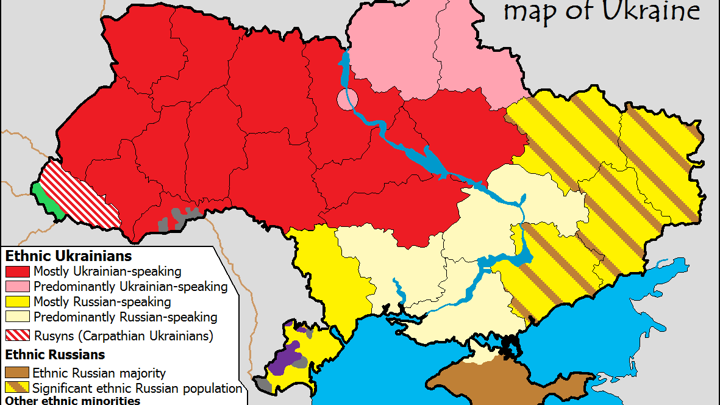
Image result for ukraine split
image (not from entry) from

Ukraine should seriously consider the option of working with all parties involved in its current crisis–including the European Union, Russia, and the United States–in taking possible steps toward its nonviolent dismemberment in a manner acceptable to its variegated population.

By John Brown. Edited by John Gershman, September 30, 2005.

The tense political situation in Ukraine may find a peaceful solution. But, at this critical juncture, efforts to maintain Ukraine as currently configured could turn out to be dangerously counterproductive. Ukraine should therefore seriously consider the option of working with all parties involved in its current crisis–including the European Union, Russia, and the United States–in taking possible steps toward its nonviolent dismemberment in a manner acceptable to its variegated population. The possibility of such a peaceful, democratic, and internationally acceptable geographical rearrangement of Ukraine should at least be put on the table before it is too late to prevent an unpredictable situation from falling out of control from increased regional, ethnic, economic, cultural, and linguistic conflicts.

Ukraine as it exists today is a failed state for several reasons. First, since its independence after the collapse of the Soviet Union, it has not succeeded in significantly improving the well-being of its population. Second, its ingrained political structures have not allowed democracy and a free press to develop. Third, as recent events demonstrate, it has clearly proved incapable of bridging the complex divide between its Russian-oriented, Orthodox eastern part and its westward-looking, Catholic area. Ukraine’s most significant achievement in the past decade was to dispose of its nuclear missiles, but this did more to ease tensions with Russia and the United States than to ameliorate the lives its ordinary citizens.

Regrettably, changing the ruling regime in Ukraine to a more European-oriented, democratic one is unlikely to provide a satisfactory, long-term solution to its enormous endemic problems. These stem in large part from the fact that the area, as a former Soviet republic with nearly 50 million people, is essentially a geopolitical construction of the USSR, not a country with sufficient national identity or self-governing experience in its history to develop as a viable economic and political entity. Ukrainian émigré nationalists will disagree with this view, but they cannot ignore the fact that prior to 1991 Ukraine–the name in its original meaning means borderland–in its entire past was “independent” for only a very short period after World War I. And it certainly was never a model of democracy, even if the Cossacks of the region earned a reputation for disregarding authority.

There are two options for the next ruling party in Ukraine. The leadership–be it composed of the current opposition or those struggling to remain in power–can try to keep the country geographically as it is. Perhaps this is possible, and provides the comforting panacea of not rocking the boat, on the surface at least. But, from a longer-term perspective, preserving Ukraine as it is could increase tensions between its ethnic groups and regions, as demands for autonomy from Russian-speaking areas already suggest. Dangerously, maintaining Ukraine as one unit at all costs could lead to greater internal conflicts leading to a bloody, Balkans-like dissolution of the country–and possible Russian intervention ostensibly to protect ethnic-Russian areas. One must not forget that modern Ukraine is not foreign to civil war, having experienced a horrid one less than a hundred years ago. In such a situation, democratic and economic reform would be all but impossible.

A second option for the Ukrainian leadership, whatever its political colors, would be the Czech and Slovak solution. After the end of Communist rule Czechoslovakia’s parliament decided to split Czechoslovakia in two–the Czech Republic and Slovakia–for a range of reasons, many of which were far from noble. But not a shot was fired during the separation, and although the “velvet divorce” has not turned the two sections of the former country into economic miracles, it has prevented tensions between them. As separate entities capable of keeping track of their own individual needs, they should play a role in NATO and the European Union more beneficial to their local populations than as smaller parts of a larger “Czechoslovakia.”

There are no models for the future of Ukraine, only options. A peaceful division of the area would be a complicated, time-consuming process requiring extensive international involvement and patience. A reconfiguration process would face great challenges, including determining the exact nature of the new entities.

Three significant challenges would face such a process. One is to effectively discourage pre-21st century romantic notions of national identity. These images, often propagated by the Ukrainian diaspora, bear little resemblance to the country in which it does not live. This “long-distance nationalism” suggests that Ukraine as it now appears on the map is bound to play a unique role in world history because of its size and location. Two, Great-Russia imperialists, who hold expansionist illusions, would also have to be held in check. Finally, Poles who want a large buffer state between themselves and Russia would have to be reminded that the well-being of the people in Ukraine, not imaginary realpolitik, is what matters most.

If the tense political situation in Kiev gets worse and if the status quo–i.e., Ukraine as currently configured–is maintained, separatist political groups and nationalities could resort to violence. Given such dire possibilities, Ukrainian leaders should look beyond a priori concepts of how the continued existence of today’s Ukraine is in the best interests of its long-suffering population or international stability. All options, including the geopolitical reinvention of Ukraine itself, deserve consideration. This could lead to a real Ukraine –not the artificial prolongation of “the” Ukraine forced upon its people during Soviet times.

John Brown, a former Foreign Service officer, has served, among other places, in Czechoslovakia, the Federal Republic of Yugoslavia, Poland, Russia, and Ukraine [...] He compiles the "Public Diplomacy Press Review."


Breaking News! Ex-police Reporter D. Brooks ("I the people") Repeats the Meaningless Word "People" only Eight Times in his latest NYT Magnum Opus/Sermon!


The Welfare State Is Broken. Here’s How to Fix It.
A social entrepreneur in Britain shows the way.

Dy David Brooks
Opinion Columnist, The New York Times
May 27, 2019; on Brooks' overuse of the word "people," see (1) (2) (3) (4) (5)

Image result for streisand people
Image (not from article) from

Ella is a British woman who grew up in a broken home and was abused by her stepdad. Her eldest son got thrown out of school and ended up sitting around the house drinking. By the time her daughter was 16, she was pregnant and had an eating disorder. Ella, though in her mid-30s, had never had a real job. Life was a series of endless crises — temper tantrums, broken washing machines, her son banging his head against the walls.

Every time the family came into contact with the authorities, another caseworker was brought in to provide a sliver of help. An astonishing 73 professionals spread across 20 different agencies and departments got involved with this family. Nobody had ever sat down with them to devise a comprehensive way forward.

In her mind-shifting book, “Radical Help,” the British social entrepreneur Hilary Cottam tracks how one of the social workers in Ella’s case spent his days. Roughly 74 percent of his time was spent on administrative matters — recording data, making referrals to other agencies and meeting with other agencies. Only 14 percent of the social worker’s time was actually spent with the family he was meant to be serving. And that face-to-face time was mostly with a clipboard, checking off boxes on the forms that went back to central administration.

The administrative system around Ella and her family costs roughly 250,000 pounds per year.

Cottam asked the government workers involved in Ella’s case if they could recall a time when they’d transformed a family so it no longer needed government help. They couldn’t think of one.

I met Cottam in London last week and she made the point that welfare systems are often designed to manage needs, but they are not designed to build capabilities so that families can stand on their own.

Moreover, most Western systems were not designed to confront the kind of poverty prevalent today. When these systems were put in place in the 1950s and ’60s, unemployment was more often a temporary thing that happened between the time you got laid off from a big employer and the time you got hired by a new one. Now, economic insecurity is often a permanent state, as people patch together different jobs to make ends meet. Health issues for people in the welfare system are often chronic — obesity, diabetes, many forms of mental illness.

Our legacy welfare structures are ill suited to today’s poverty.

Cottam has spent the past decade or so helping local authorities across Britain build new welfare programs. Her programs start by shifting power to the former “recipients” of services. The programs ask, What sort of trajectory would you like to be on? Then the programs build social networks around the families to help them achieve their goals.

For example, Ella was asked if she would like to lead a “life team” that would help her family turn around. She agreed. She was given the power to select the eight people from across agencies who would comprise the team. She chose people from social work, the housing authority and the police force.

Members of the team spent 80 percent of their time with the family and only 20 percent on administration. Ella and the team worked together to stabilize her most immediate issue — negotiating away eviction notices. Then the team worked to improve inter-family dynamics so there wasn’t so much violence and screaming.

After a family is stable, the team and family work on building skills and telling stories of success. By 18 months, many of the families involved in the Life Team program no longer need the team. Ella got her first office job and assumed more responsibility for her family. Her kids were back in mainstream schooling.

In the old welfare model, social workers are detached professionals and overwhelmed, bound by bureaucratic rules and often slipping into emotional permafrost. At Life Team, it’s about relational accompaniment, giving social workers the discretion to do what they think is best.

Cottam has designed other programs with a similar collaborative ethos. Backr is a program that takes people who are detached from the labor force and helps them join extended social networks where they can connect one another to job openings and develop skills. Circles is a program for the elderly. It brings together lonely seniors into small groups that are part social club, part concierge service and part self-help cooperative. Wellogram is a similar social structure for the chronically ill.

Basically, Cottam’s programs create villages within the welfare state. Her systems are not designed around individual clients, but around relational networks. People tend to have better outcomes when they are held accountable by a network of peers. Three-quarters of the smokers in Wellogram successfully quit, 44 percent lowered their blood pressure, 64 percent started work or went back to school.

The old legacy welfare programs were designed for people enmeshed in thick communities but who had suffered a temporary setback. Today many people lack precisely that web of thick relationship. The welfare state of the future has to build the social structures that people need to thrive. This is one way government can build community.

The Times is committed to publishing a diversity of letters to the editor. We’d like to hear what you think about this or any of our articles. Here are some tips. And here’s our email: letters@nytimes.com.

Follow The New York Times Opinion section on Facebook, Twitter (@NYTopinion) and Instagram.

David Brooks has been a columnist with The Times since 2003. He is the author of “The Road to Character” and the forthcoming book, “The Second Mountain.” @nytdavidbrooks

A version of this article appears in print on May 28, 2019, on Page A26 of the New York edition with the headline: The Welfare State Is Broken. Here’s How to Fix It.. Order Reprints | Today’s Paper | Subscribe

Monday, May 27, 2019

Image for the day [From "The surreal life of George Papadopoulos"; below pictured with his wife Simona]


Trump as a "useful idiot"


E.J. Dionne Jr., "The Trump coverup no one is talking about: The emperor has no money," The Washington Post, May 26; on the term "useful idiot," see; on Trump as a 60s peacenik, see

Image result for useful idiot
image (not from article) from
Excerpt:
“Normal” Republicans are regularly described as privately horrified with Trump. Trump is said to have engaged in “a hostile takeover” of the GOP.
In fact, it’s Trump who has been taken over. He campaigned as a different kind of Republican, and his infrastructure promise was a major component of his antiideological image. But on all the things the ideologues and right-wing business interests care about — tax cuts, corporatist judges, deregulation — Trump caves in.

Sunday, May 26, 2019

Updated 5/30/2019: DC Litter Near-daily Pick-up (the LPU initiative) in the Imperial Capital!

Sunday, May 19, 2019


See also: an encouraging article under the title: "Plastic Gets a Do-Over: Breakthrough Discovery Recycles Plastic From the Inside Out." See also (1)


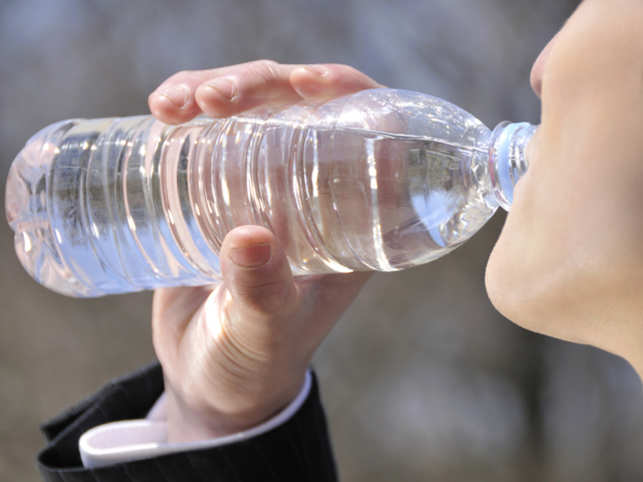
Image result for plastic bottles
image from

On my quite not infrequent 45-minute jog (stroll might be a better word) in NW Washington DC (down Tilden Street to Rock Creek Park; along the path in Rock Creek Park


Image result for washington dc rock creek park

to Porter Street; up Porter Street to Connecticut Avenue; jog ends at the Van Ness/ UDC metro station) I do my "citizen's thing" and pick up litter.

FYI, I jog (when I do jog rather than stroll, very slowly) with a bag (yes, I plead guilty: ... a plastic bag) in hand where I place the litter.


Image result for northwest washington dc
NW Washington DC image from

As I stretch my aging muscles, have taken a special interest in picking up plastic water bottles left empty/half empty along my strollin'/joggin' way.

(Some of the plastic bottles, btw, are filled with urine, as I've noticed on several occasions on the east side of Tilden Street leading downhill to Rock Creek Park.)

May I note that the plastic bottles are not the only form of trash I pick up. The waste ranges (aside from its plastic bottled incarnations) from empty aluminum cans/glass bottles to used plastic prophylactics (which I delicately place in my trash bag with the aid of a branch found on a [thank God!] tree-filled environment).

FYI, below my accounting of yours truly's encounter with human-made "let's throw 'em out, wherever/whatever, even if the shit is homo 'sapiens' objects."

Pardon the gory details, but here's the trash/litter/junk I find (and pick up, whenever I physically can) on a near-daily basis on the streets/Rock Creek park of our glorious nation's capital:

  • Receipts/bills; paper/paper "tissues": napkins (evidently from from fast-food joints); paper bags containing the remains of "junk food"; "colorful" wrappings from candy manufacturers; cellophane plastic wrap
  • Dumped-wherever-on-the street/sidewalk, no longer "reusable" disposable coffee cups (sorry: I don't know: what are they exactly made of, hardened paper with a touch of plastic?)  Here's the answer I found on: 
  • Though they are made largely of paper, disposable coffee cups are lined with plastic polyethylene, which is tightly bonded to the paper making the cups waterproof and therefore able to contain liquid. In addition, the difficulty of recycling coffee cups is increased by the fact they are contaminated with drink: [image from cited article] 
 Image result for what are takeaway coffee cups made of
  • Circular plastic lids punctured, in the middle, for use with plastic straws for "soft" drinks, cold coffee (?), etc.
  • Plastic straws (related to the above): Yes, they're still out there -- lonely motionless plastic worms in our wide open American spaces, often stuck into the ground/trash-infested mud -- despite the DC gov's efforts to limit their use.
Image result for Zach Rybarczyk
  • Zach Rybarczyk, who works for the D.C. Department of Energy and Environment, inspects restaurants in Union Station on Jan. 8 to see whether they are still using plastic straws after the city’s ban went into effect this year. Cava passed its inspection. (Calla Kessler/The Washington Post)
  • Plastic zipper bags (I suspect from super markets/grocery stores), mostly empty, but often containing crumbs from the consumed food they enveloped
  • Cans (mostly for so-called "soft drinks"/beer), often flattened by street traffic and found mostly on curbs
  • Glass bottles (again, mostly for beer, but also for "hard" alcohol); Corona appears to be a favorite, often with empty bottles left on Tilden Street (past Connecticut Avenue) in a six-pack cardboard container slightly hidden in its sidewalk/wooded area
  • Remains from junk food bags/containers: plastic knives/forks/spoons; ketchup/other food additives (to give the "food" taste) in relatively small white plastic (not always) rectangular receptacles (half the size of my thumb) with a "slip-off" cover
  • Other miscellaneous plastic/elastic objects: combs, ballpoint pens, used /slimy prophylactics, credit cards, rubber bands
  • Newspaper pages, in whole on in part, left/dumped on the street/sidewalks (many of which are evidently unread)
  • Cardboard, often the largest litter in term of individual size. (Do we have Amazon to thank for this influx of oversize cardboard in our relatively "open" spaces of the imperial capital?)
  • Empty cigarette packs, mostly of the "menthol" type; my bad: I don't pick up cigarette butts
  • Gloves: A real litter discovery for me! Amazing how many gloves (many of them, often "single," are made of plastic)
  • Scooters: I not-so-gently push these unregulated atrocious "affordable transportation" gimmicks, exploiting (tax-free?) off pedestrian space; btw, in urban spaces, it's called a sidewalk, not a sidescooter
  • Excuoooose me, but I consider scooters steel/iron/rubber litter, especially if not unregulated on park trails/sidewalks. Their drivers are violently -- yes, mentally violently (I can't think of another word) and narcissistically (correct spelling?) me-me-me first. The mentality behind the free-wheeling scoots: Just leave my groovy "thing" behind wherever/whenever on trails/sidewalks; in other words, to put it violently (if I may interpret the mentality) - f...k you (pointing the finger), I'll leave my thing wherever/whenever I f...kin' feel/like. (Note, BTW, are not where the scooters "ride" on tax-payer funded sidewalks/parks, where the scooters-riders abandon their tax-free things on D.C. streets/trails?; also their travelling gadgets (and how really "safe" are they?) are dumped free of charge in parks in pedestrian areas called trails  -- complete eye-sores in a "God-bless-pristine Mother Nature setting."Various car parts, left near/on a sidewalk/curb (especially car wheels, hard to fit in a city trash bin)
  • Dog shit (pardon my language, I meant pooh) in (usually green) plastic wrappings left "wherever" by evidently well intentioned animal masters who don't want to be accused of leaving shit behind without the proper plastic embellishment
  • I initially refused -- for health reasons -- to pick up this plastic-covered shit, but broke down and am now putting the plastic-covered poo in my plastic litter bag. BTW, I recently  bumped into an evidently cultivated lady of a certain age on my near-daily trash adventure in our so-called "upscale"neighborhood who said, when I saw her picking up dog shit, "If I don't pick up this pooh, who will?" 
  • Kids' toys, usually minuscule and made of plastic -- Is that not the most unacceptable litter "left behind"? Poor kids
[Note: Given my failing memory, I may be missing, in the below numerical assessment, a plastic water bottle or two.]

Needless to say, the plastic water bottles in NW DC I stumble upon end up in the public garbage receptacles in the National Park/along Connecticut Avenue.


**
BUT NOW THE SERIOUS PART!

Enjoy the  Statistics: LPU (Litter Plastic Pick-up) in the Imperial Capital

Date [missing dates mean no strolling/jogging on that day]; no. of plastic water bottles pick ups [on a given day, I may have miscounted, plus or minus, by a bottle or two]


4/22--15

4/24--8

4/25--5

4/26--6

4/27--2

5/3--7

5/4--5

5/5--4.5 (one bottle was broken in half)

5/6--3 (one bottle found on Conn Av after my jog)

5/7--6 (including one half-filled bottle on the roof of a car parked in Rock Creek Park; and an empty Perrier plastic bottle -- vive la France! -- along Porter Street)

5/9--2 (found on Connecticut Avenue)

5/11 -- 10!!! The most bottles found since 4/22! ) Porter Street wins with the most plastic bottles!

4/22-5/18--81.5 empty/half empty H20 plastic bottles picked up in the NW section of the Imperial Capital! A World Record!!! (hah, hah, hah)


(Please correct my math, unprofessional reporting)


No wonder USA is no. 1! 
***


5/19--1 (One plastic water bottle found during a stroll on Connecticut Avenue)

5/22--2 (If my memory serves me right)

5/26--11! Another record plastic water bottle pick-up day!!! 11!!! [see April 11, which held the previous record -- 10] Eleven plastic empty/near empty water bottles picked up (including one, nearly full of urine, on the Tilden Street divider as it leads down to Rock Creek east past Connecticut Avenue!) 

5-27--4 Including a Perrier plastic bottle (again, vive la France!) and the first such plastic "water" bottle found by your favorite scavenger: vitamin water)


Image result for vitamin water
image from


5/30-- 8 plastic water bottles found! I could hardly contain my joy (no, I won't say disgust) at such an exciting discovery ...
6/1---9 pwbs found -- all on Connecticut Avenue (including four in a brown paper bag)


P.S. But look at these statistics on the bright side: We Americans are now evidently drinking a source of life, water (or so it's labelled by some liquid-peddling corporations), rather than sugary soda bubbly once-canned "drinks" (Hey, people, listen: things don't always go better with Coke or beer) ... And we (the fair sex included) don't need public toilets to urinate from our water-filled kidneys, just use 'em empty plastic water bottles!
[See: "Can Women Pee in a Bottle While Backpacking?... Believe it or not, urinating in a bottle is your best solution, regardless of the situation. Although most of us don't have quite the aiming capability that guys do, with a little practice we can develop pretty good control over our urine stream—enough to pee into a wide-mouth water bottle if we can get it up close to us."]
Now, if we could only gastronomically chew on our omnipresent dumped-over-everywhere plastic items in a family-friendly restaurant, tastier than can ever be imagined if spiced with a popular Heinz ketchup, if your stomach can stand it ...

Workers ditching gig economy

from linkedin

Workers ditching gig economy

Updated 21 days ago
Are gig companies between a rock and a hard place? A tightening U.S. labor market, with unemployment at a half-century low, is spiriting away workers, The Wall Street Journal reports. Many switch between gigs quickly, never staying for more than a few months or only working part-time to supplement incomes. Meanwhile, loss-making companies like Uber and Lyft are hard-pressed to improve pay and benefits, especially as they go public.

Feed Updates

Drivers with gig economy services like Uber and Lyft don't tend to stay with an app for very long. In fact, some gig economy startups could have a turnover rate as high as 500% per year, The Wall Street Journal reports. Yet for those who continue to use Uber and Lyft for full-time employment, pay can be as low as $15,000 a year. That's why many drivers have planned a massive strike on May 8 to protest low wages and little job security. "With the IPO, Uber's corporate owners are set to make billions, all while drivers are left in poverty and go bankrupt," executive director of the New York Taxi Workers Alliance said in a release. Follow Business Insider for more coverage. hashtagbusiness hashtagemployment hashtaguber hashtaglyft hashtaggigeconomy
I love the question and answer posed in the article. ‘Have you guys ever considered you may burn through the entire available labor market of people interested in or willing to do roles like this?’ and they did not have an answer for that.
The gig worker model is beneficial for some companies and spells trouble for others.


As we move forward, what are the options as it relates to hashtagGig hashtagemployees -  a lot if you are in the estimated 16.5 million people who are working within the Gig economy.  The reality is that so many organizations are in fact using some form of Gig employees and this trend is showing no signs of going away.  This year may bring many things, including some alterations in these employees that employers should be mindful of and consider how to engage these individuals who can add significant value against the funds expended to retain their services.  http://ow.ly/ooRp30oykcw  hashtagEmploymentLaw hashtagBrownandConnery hashtagHR hashtagSmallbusiness hashtagworkplace hashtagspeaker
Here's some CRAZY FACTS... . 👉🏻 Today, 36% of U.S. workers are in the "Gig Economy," (as in they have some kind of side hustle!) . 👉🏻 And this workforce is currently expanding 3X FASTER than the traditional workforce. . 👉🏻 Experts are saying this side gig phenomenon will reach up to 43% of all workers by 2020! . The Gig Economy is “a thing” now, but it’s not exactly a new idea... . I’m featured in a new article on where all this began, which just got published on Thrive Global. Check it out and let me know what you think! . hashtagsidegig hashtaggigeconomy hashtagsidehustle hashtagdirectsales hashtagnetworkmarketing hashtagtheoriginalsidegig
There is nothing new here, the Gig economy has always been around, it just didn't have a catchy name in previous decades. The tightening labor market does create more opportunity for negotiation for compensation and benefits. With the astronomic increases in the cost for basic health coverage for individuals in the past 3 years, it makes a traditional gig even more attractive.
The GIG economy is all about low pay.  If the pay was not lower than hiring the employees, there would be no GIG economy.
 In response to